

From mid-9 to early 10,AltayThe region enters its most vibrant season of the year. Birch, larch, and Siberian larch change color in succession across different elevations, creating a stunning gradient from golden yellow to deep red. Based on operational data from multiple autumn tours over the years, China International Travel Service Xinjiang has integrated Kanas, Hemu Village, and Keketuohai—the three core autumn destinations in Altay—into several 6-12-day premium small-group tour itineraries with no hidden stops. These tours operate in intimate groups of 2 to 6 people. To fully experience Altay's autumn splendor in 9, we recommend our top-selling autumn scenery special route:Altay · Autumn Hunt 7 Days — Kanas EditionDesigned specifically for autumn in Altay, this route precisely covers the core fall scenery of Kanas, Hemu, Baihaba, and Five-Colored Beach. It is the recommended itinerary for a short trip to Altay.
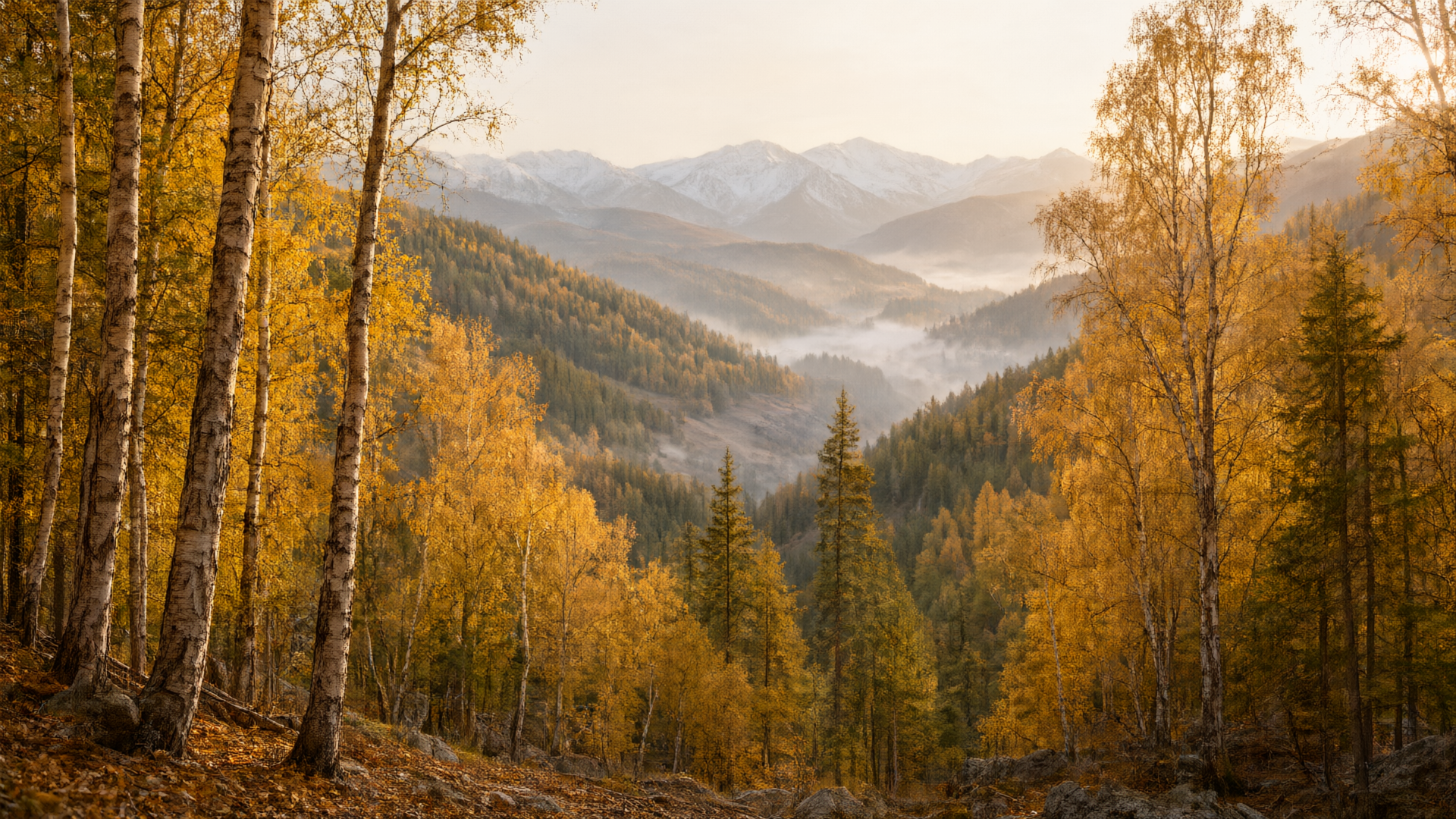
Geographic logic of route design
On the map, Kanas and Hemu Village are located north of Burqin County, approximately 60 kilometers apart with a driving time of 1.5 hours. Keketuohai is within Fuyun County, about 280 kilometers from Burqin. These three destinations form a triangular route; traditional itineraries often involve backtracking.
Our route follows a one-way strategy: starting in Urumqi, we head to Fuyun County, then Keketuohai. From there, we travel north to Burqin and explore Kanas and Hemu Village before returning to Urumqi from Burqin. The total distance is approximately 1800 km, with no more than 300 km of driving per day on average, ensuring ample time for sightseeing. This approach eliminates backtracking and creates a seamless progression in elevation and scenery—from the autumn canyons of Keketuohai, to the alpine lakes of Kanas, and finally ending with the morning mist and smoke of Hemu Village. For travelers with plenty of time who seek a more luxurious and immersive experience, we highly recommend this option.Beijiang Pastoral Autumn 8-Day Luxury EditionUpgrade accommodation and vehicle options, covering niche wildscapes and classic autumn foliage.
Keketuohai Section: A Dual Landscape of Geology and Color
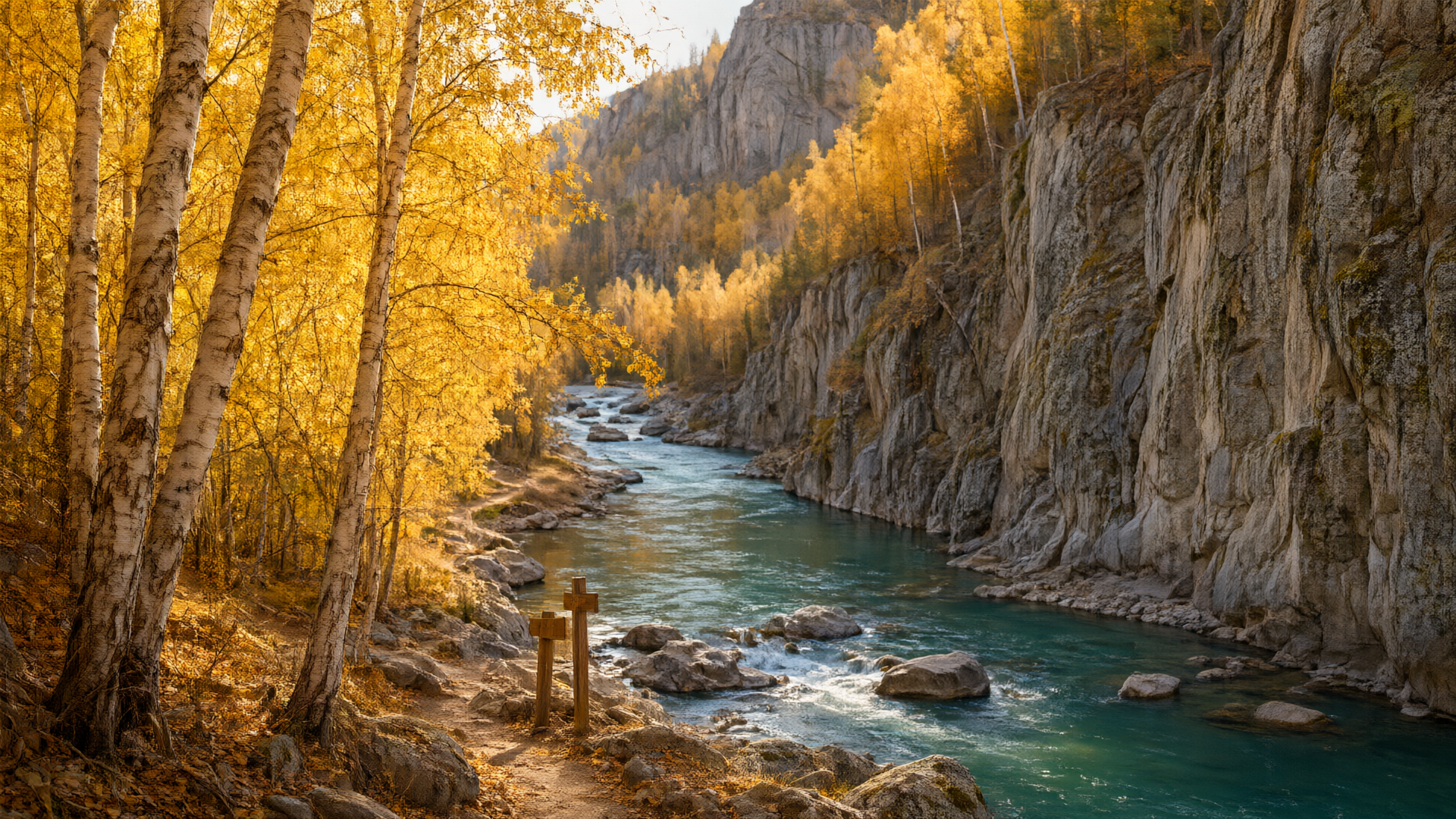
The highlight of Keketuohai National Geopark is the Ertix Grand Canyon. In late 9, the birch forests on both sides of the canyon turn color, creating a striking contrast between golden leaves and gray-white granite formations. The Ertix River flows into the Arctic Ocean and maintains stable water levels in autumn. Its emerald-green waters complement the golden vegetation along the banks, forming a classic warm-and-cool color palette.
We have planned a 1.5-day itinerary for this section. After arriving on the afternoon of Day 1, you will enter the Geological Park and hike approximately 4 km along the Irtysh River, passing iconic geological formations such as Divine Bell Mountain and Flying Stone. On the morning of Day 2, we will visit Mine No. 3 in Keketuohai—a rare metal mining site that once helped repay the nation's foreign debt. Some mine tunnels are now open for visitors. In autumn, the vegetation surrounding the mining area turns deep red, creating a striking visual contrast with the industrial heritage sites.
Kanas Section: Autumn Features of the Alpine Lake
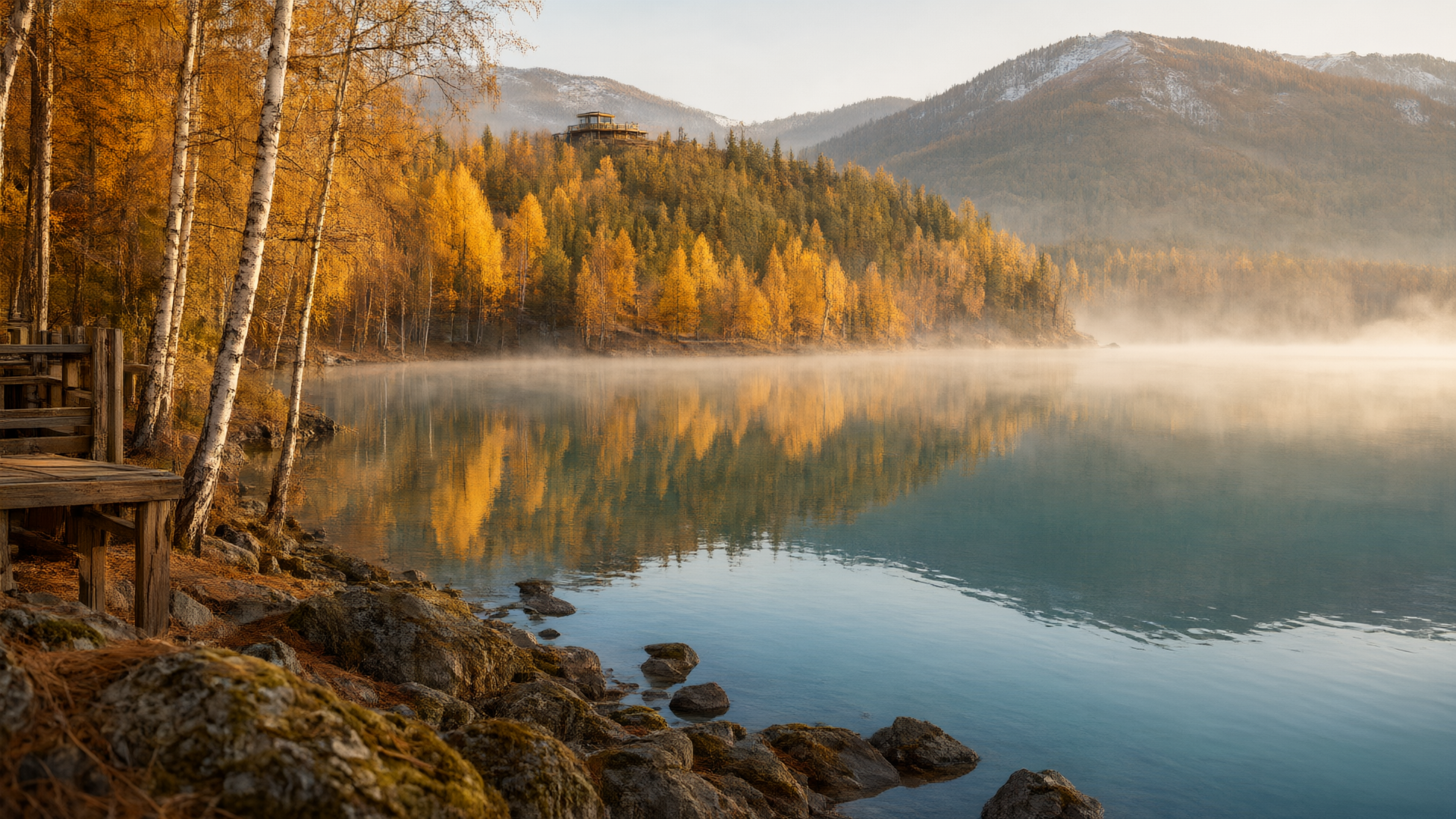
The core of Kanas Lake's autumn scenery lies in the combined effect of water color and vegetation changes. From late 9 to early 10, the lake takes on a blue-green hue due to its mineral content and light refraction, while the surrounding Siberian larches and birches turn golden. This striking color combination is most vivid at three viewing spots: Fish Watching Terrace, Moon Bay, and Sleeping Dragon Bay.
We've planned a 2-day itinerary for Kanas. On Day 1, enter the scenic area from Jiadayu and take the shuttle bus to the shore of Kanas Lake. In the afternoon, hike up Guanyu Terrace for a panoramic view of the lake. On Day 2, walk along the Three Bays Boardwalk from Wolong Bay through Moon Bay to Fairy Bay—a total distance of about 12 km, taking approximately 4 to 5 hours on foot. The boardwalk winds between the riverbank and the forest. During autumn, sunlight filters beautifully through the larch trees, making it ideal for photography.
Hemu Village: A Typical Autumn Day in the Tuva Settlement
Hemu Village is China's most complete surviving settlement of the Tuva people, with approximately 140 households currently residing there. The village architecture preserves the traditional log-stack construction style, featuring A-frame roofs designed to withstand heavy winter snow loads. In autumn, Hemu Village is surrounded by birch forests; morning cooking smoke blends with valley mist, creating a highly recognizable visual scene.
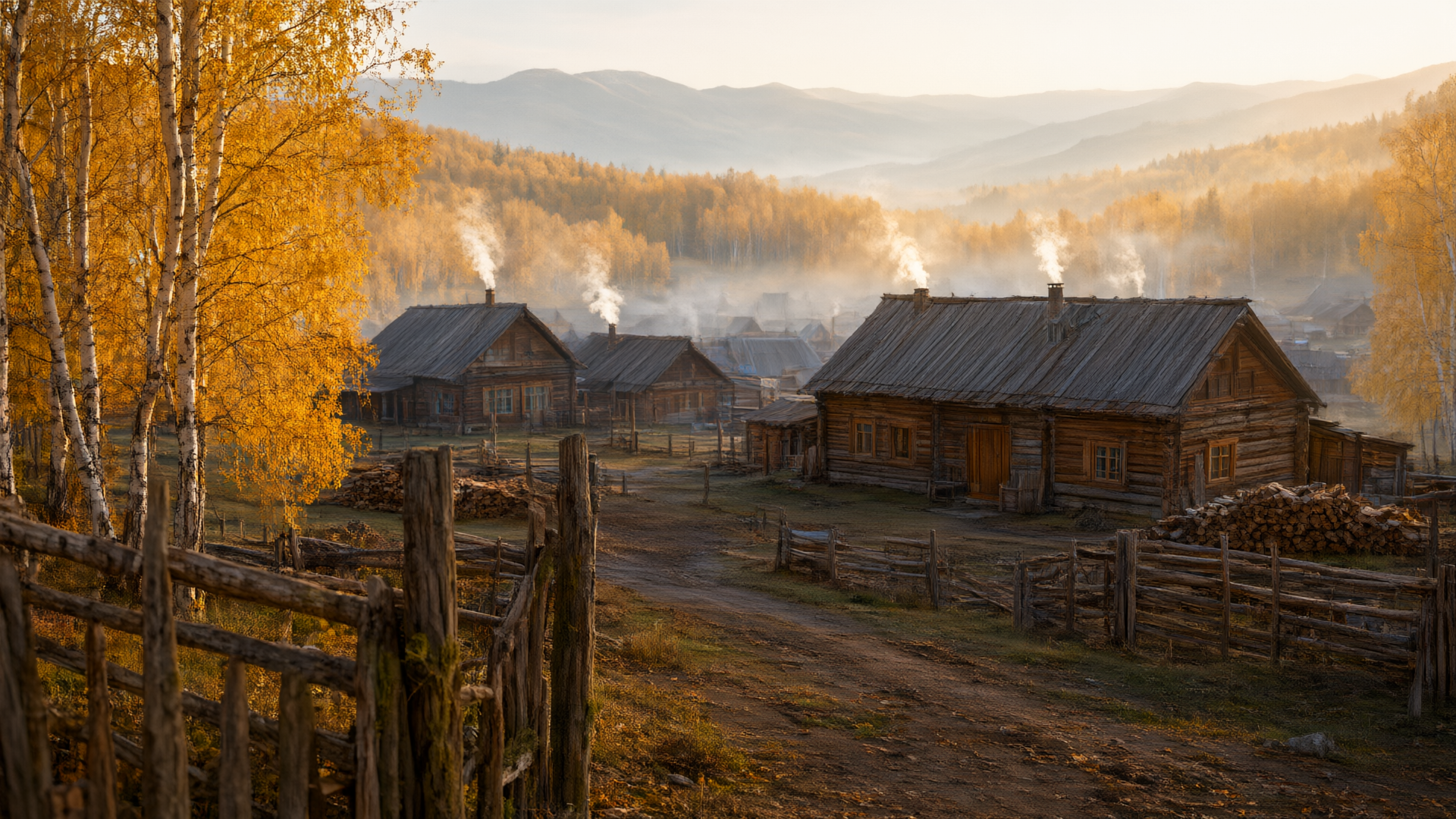
We'll spend 1.5 days in Hemu. After arriving in the afternoon on day one, walk through the village and observe the Tuva people's autumn preparations—chopping firewood and drying dairy products. On day two, depart at 6 AM to the viewing platform north of the village to capture the morning mist. This mist forms from evaporation over the Hemu River and, due to a temperature inversion layer in the valley, tends to linger until around 9 AM.
Group buying mode operational logic
The core advantage of a small group tour for 2 to 6 people is itinerary flexibility. In autumn, weather in Altay changes rapidly; snow may arrive as early as the end of 9 through the beginning of 10. Small groups can adjust stop durations based on real-time road conditions. For example, if heavy snow closes access to Kanas Scenic Area, the tour can extend the stay in Hemu Village by half a day and wait for conditions to improve before proceeding.
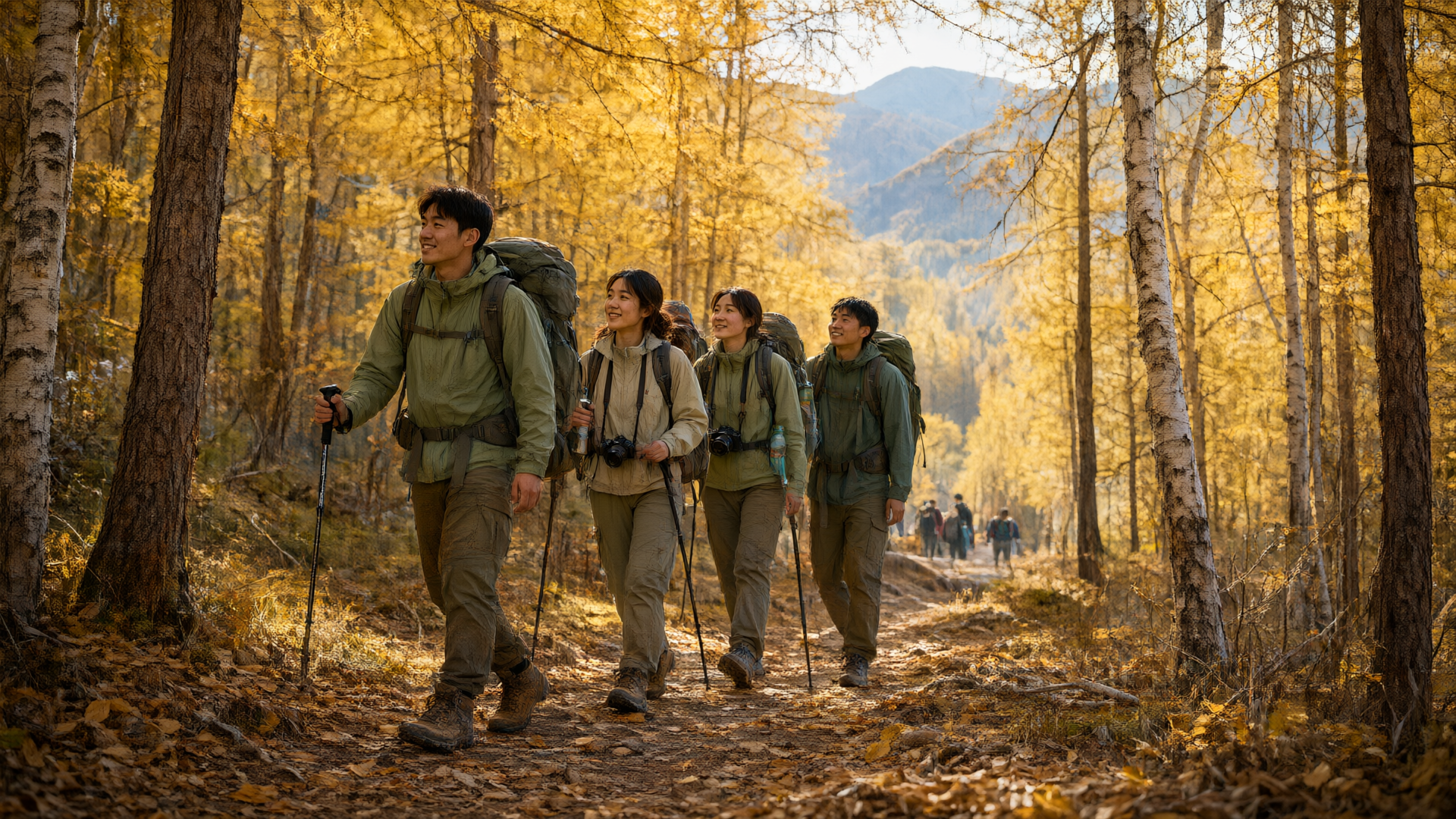
For vehicle configuration, small groups use 7-seater business vans or SUVs, which are better suited to Altay's mountain roads than traditional coaches. Regarding accommodation: groups of 2 can opt for standard twin rooms, while groups of 4 to 6 stay in private wooden cabins or entire homestay compounds to ensure privacy within the group. In small-group tours, the guide and driver are often the same person, streamlining communication and reducing labor costs—savings that are directly reflected in the tour pricing.
Booking & Travel Tips
Altay's autumn is peak tourist season. Tours from 9 to 15 typically require booking 30 days in advance. Xinjiang China International Travel Service's customization team will provide specific arrangements based on group size, travel dates, and budget.Itinerary Plan. Visitors can call 18999127242 orOnline ChatGet detailed quotes and schedules for the current season.
Note that in autumn, Altay experiences large temperature differences between day and night. Daytime highs reach about 15°C, while nighttime lows can drop to -5°C. We recommend bringing a fleece-lined shell jacket, anti-slip hiking boots, and a polarizing filter—the latter is especially effective for reducing glare on Lake Kanas.
Recommended Reading
- Altay Premium Autumn ItineraryPure sightseeing tour, no shopping. Small group for 2-6 people. Deeply explore Kanas, Hemu Village, and Keketuohai.
- The Ultimate Guide to Xinjiang's Most Stunning Destinations— Introduction to Kanas, Hemu, and Keketuohai Scenic Areas
- Northern Xinjiang Tour Routes— Classic Route: Kanas, Sayram Lake, and Tianchi
- Custom Itinerary Planning— Expert travel planner creates a personalized Xinjiang itinerary just for you
- Travel Review— See real feedback from visitors traveling to Altay in autumn
Recommended for You
Popular Routes:
Recommended Attractions:The Ultimate Guide to Xinjiang's Most Stunning Destinations


